

Yüksek ses efektleri ve renkli animasyonlar, bettilt giriş slot oyunlarını daha eğlenceli hale getirir.
Canlı maç yayınlarıyla eşsiz deneyim yaşatan bettilt favori siteniz olacak.
2026 yılında piyasaya çıkacak olan bettilt yeni kampanyalarla geliyor.
Bahis dünyasında şeffaf yönetim politikasıyla güven kazanan bettilt sadık bir topluluğa sahiptir.
Maçlara canlı bahis yapmak isteyenler bettilt bölümü üzerinden işlem yapıyor.
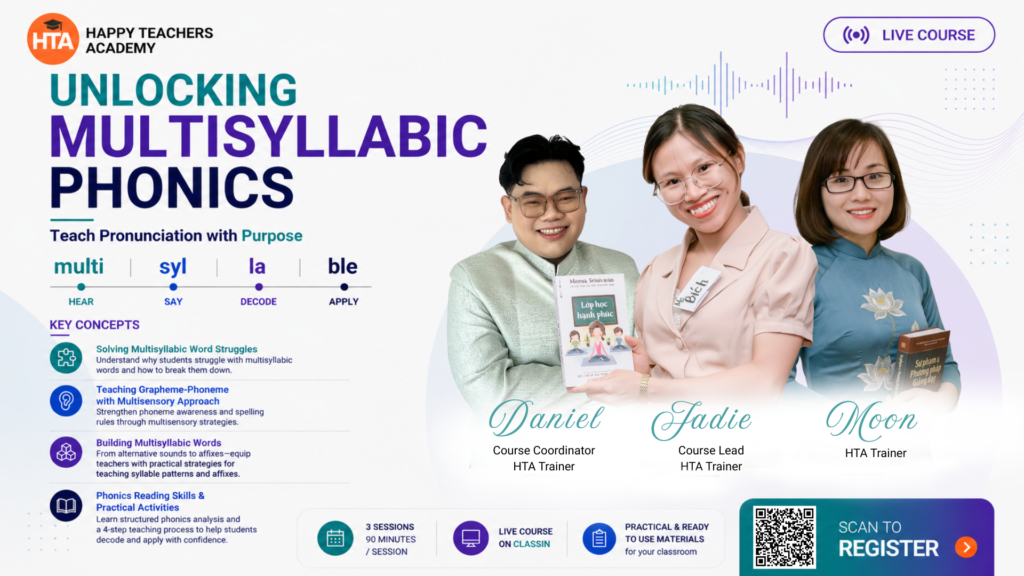
Unlocking Multisyllabic Phonics
Description
Practical pronunciation training for EFL teachers, covering phonics, syllabification, word stress, and connected speech through interactive classroom-ready activities.
Course Features
- Live Interactive Workshop Sessions
- Downloadable Teaching Resources
- Interactive ClassIn Activities
- Guided Teaching Demonstrations
- Collaborative Practice Tasks
- Final Assessment Quiz
- Certificate of Completion
Master Pronunciation Through Practical Teaching
1 FREE SESSION- • Live interactive pronunciation training sessions
- • Multisyllabic phonics teaching strategies
- • Syllable division decoding techniques
- • Practical classroom pronunciation activities
- • Connected speech teaching techniques
- • Word stress and schwa training

Unlocking Multisyllabic Phonics
Unlocking Multisyllabic Phonics
Course Features
- Live Interactive Workshop Sessions
- Downloadable Teaching Resources
- Interactive ClassIn Activities
- Guided Teaching Demonstrations
- Collaborative Practice Tasks
- Final Assessment Quiz
- Certificate of Completion
Description
Sound by Design is a practical professional development course for EFL teachers who want to teach English pronunciation with greater confidence, structure, and clarity. The course explores how English sounds connect to spelling, syllables, rhythm, stress, and connected speech, helping teachers move beyond simple repetition drills toward more effective pronunciation instruction.
Designed especially for teachers working in language centers and online classrooms, this course combines clear explanations with highly interactive teaching demonstrations and ready-to-use classroom activities. Participants will explore both foundational phonics concepts and more advanced pronunciation features that support fluency and natural communication.
What Participants Will Explore
- Foundations of phonics and sound-letter relationships
- Sound segmentation and blending techniques
- Teaching multisyllabic words and syllable division
- Prefixes, suffixes, and word structure awareness
- Word stress, schwa, linking, and connected speech
- Common pronunciation challenges for Vietnamese learners
- Practical pronunciation games and fluency activities
- Classroom techniques for building speaking confidence
Course Features
- Live interactive sessions on ClassIn
- Practical classroom demonstrations and activities
- Downloadable teaching materials and resources
- Interactive EDB activities and collaborative tasks
- Reflective teaching discussions and guided practice
- Certificate of completion after final assessment
This course is ideal for teachers who want a more systematic and classroom-focused approach to pronunciation and phonics instruction.
Sessions
-
1
Free - Solving Multisyllabic Word Struggles No time slots available
-
2
Session 1 - Teaching Pronunciation Using a Multisensory Approach No time slots available
-
3
Session 2 - Syllable Division – Skills for Reading Multisyllabic Words No time slots available
-
4
Session 3 - Phonics Reading Skills with Affixes & Practical Teaching Activities No time slots available
Live Sessions
-
1
Free - Solving Multisyllabic Word Struggles
-


Free - Solving Multisyllabic Word Struggles



What You’ll Learn
Many teachers can confidently teach simple phonics patterns, but often feel unsure when students encounter long, complex words. In this opening session, participants explore why multisyllabic vocabulary becomes such a major obstacle for learners, especially in Vietnamese EFL contexts. The session unpacks the deeper reasons behind decoding struggles, pronunciation breakdowns, and learner hesitation when reading unfamiliar vocabulary. Rather than relying on memorization alone, teachers are introduced to a more systematic way of approaching pronunciation and decoding instruction.
Participants will also explore the connection between phonological awareness, syllable recognition, and reading fluency. Real classroom examples and learner mistakes are analyzed so teachers can better understand the patterns behind these difficulties. This session serves as the foundation for the entire course by helping participants shift from intuitive pronunciation teaching toward a more structured and evidence-informed approach. Teachers leave with a clearer understanding of how multisyllabic phonics instruction works and how later sessions will build on these core concepts.
Breakdown
- Common decoding struggles in Vietnamese classrooms
- Why students fear long English words
- Phonics misconceptions and over-reliance on memorization
- The role of syllables in reading fluency
- Understanding learner transfer from Vietnamese pronunciation patterns
- Introduction to systematic decoding instruction
What You’ll Gain
By the end of this session, participants gain a much clearer understanding of why many learners continue to struggle with pronunciation and reading accuracy even after years of English study. Teachers begin developing a stronger “big-picture” understanding of phonics instruction and start seeing pronunciation as a connected system rather than isolated sounds or repetition drills.
The session also helps teachers build confidence in discussing pronunciation challenges more professionally and analytically. Instead of simply correcting errors, participants begin recognizing underlying learner patterns and identifying where decoding processes break down. This shift allows teachers to approach pronunciation teaching with greater clarity and purpose.
Teachers will also gain practical insight into how the course roadmap progresses from basic phonics awareness toward more advanced decoding and connected speech instruction. The goal is not only to improve teacher knowledge, but also to reduce uncertainty and hesitation around teaching pronunciation explicitly in the classroom.
Breakdown
- Stronger understanding of multisyllabic decoding
- Greater confidence teaching pronunciation systematically
- Awareness of common learner pronunciation patterns
- A clearer framework for teaching long-word reading
- Better understanding of phonological awareness
- A roadmap for future sessions and teaching progression
What You’ll Do
This session is highly interactive and designed to help teachers immediately connect theory to classroom practice. Participants work through real examples of problematic multisyllabic words and observe how learners often attempt to decode them incorrectly. Teachers actively analyze these breakdowns and discuss why they happen.
Throughout the session, participants engage in guided demonstrations, collaborative discussions, and practical decoding tasks using interactive ClassIn tools. Rather than passively listening to theory, teachers are encouraged to reflect on their own teaching methods and compare them against the systematic approaches introduced during the workshop.
Teachers will also observe how multisyllabic instruction can be simplified visually and broken into manageable teaching stages. The session creates a supportive environment where participants can experiment with techniques, ask questions, and begin building confidence before moving into more advanced pronunciation and syllabification work in later sessions.
Breakdown
- Analyze real learner pronunciation mistakes
- Practice breaking down long vocabulary step-by-step
- Participate in decoding demonstrations
- Explore interactive EDB and ClassIn activities
- Discuss classroom pronunciation challenges collaboratively
- Reflect on current teaching approaches and learner outcomes
Session 1 - Teaching Pronunciation Using a Multisensory Approach
You're currently previewing this session. Browse the timeslots, then register for the course to reserve one.
What You’ll Learn
This session introduces participants to a highly visual and multisensory approach to pronunciation instruction. Many learners struggle because pronunciation is often taught abstractly through imitation alone, without enough physical or visual support. In this session, teachers explore how articulation can be made far more understandable by helping students physically see and feel how sounds are produced.
Participants learn how to guide tongue placement, lip positioning, airflow, and mouth movement when teaching difficult consonant and vowel sounds. The session also introduces techniques such as color-coding, oral cavity mapping, gesture systems, and visual reinforcement strategies that make pronunciation instruction more engaging and accessible for learners.
Teachers are also introduced to key sound generalization rules that support decoding accuracy and pronunciation development. The overall goal is to help participants move beyond correction-based teaching and toward clearer, more supportive pronunciation instruction that learners can actively understand and apply.
Breakdown
- Multisensory pronunciation teaching techniques
- Oral cavity mapping and articulation guidance
- Teaching tongue, lips, and teeth positioning
- Color-coding systems for sound instruction
- Generalization rules for decoding support
- Visual and physical reinforcement strategies
What You’ll Do
During this session, participants actively practice pronunciation instruction techniques instead of only discussing them theoretically. Teachers observe demonstrations of articulation teaching and then apply the techniques themselves through guided activities and collaborative tasks.
Participants work with visual pronunciation tools, sound maps, gestures, and interactive activities designed to mirror real classroom scenarios. Teachers experiment with explaining difficult sounds using physical positioning and multisensory supports while receiving examples of how to scaffold instruction more effectively for learners.
The session also includes interactive ClassIn tasks where teachers engage with practical pronunciation exercises, decoding demonstrations, and classroom-ready activities. By the end of the session, participants will already have multiple techniques and resources they can immediately use in their own lessons.
Breakdown
- Practice articulation demonstrations
- Use oral cavity and sound-mapping visuals
- Explore multisensory pronunciation activities
- Apply color-coding and gesture systems
- Participate in interactive decoding tasks
- Trial classroom-ready pronunciation exercises
Session 2 - Syllable Division – Skills for Reading Multisyllabic Words
You're currently previewing this session. Browse the timeslots, then register for the course to reserve one.
What You’ll Learn
In this session, participants move deeper into advanced phonics instruction by focusing on syllable division and the decoding of multisyllabic vocabulary. Many learners can manage short phonics patterns successfully but begin to struggle when words become longer and more visually complex. This session introduces teachers to structured syllabification techniques that help students approach unfamiliar vocabulary more confidently and systematically.
Participants explore core syllable division rules and learn how to identify common syllable types, including open and closed syllables. The session also introduces the role of prefixes, suffixes, and morphological awareness in supporting pronunciation, decoding, and spelling accuracy. Teachers will examine how understanding word structure allows students to move away from guessing and toward more predictable decoding strategies.
The overall focus is on helping teachers simplify long-word reading instruction into clear, teachable stages. Through practical examples and guided demonstrations, participants develop a stronger understanding of how syllabification supports reading fluency, vocabulary growth, and learner confidence in real classroom settings.
Breakdown
- Core syllabification rules and techniques
- Open and closed syllable identification
- Strategies for decoding multisyllabic vocabulary
- Prefixes, suffixes, and morphological awareness
- How syllable structure supports reading fluency
- Reducing learner dependence on memorization and guessing
What You’ll Gain
By the end of this session, participants gain a far more structured and practical approach to teaching long-word decoding. Teachers begin understanding how to guide learners through unfamiliar vocabulary step-by-step instead of relying on repetition or isolated memorization techniques.
The session also helps participants build confidence teaching advanced phonics concepts that are often avoided or simplified in many classrooms. Teachers gain practical tools for helping students recognize recurring syllable patterns, identify meaningful word parts, and approach reading with greater independence and accuracy.
Another major outcome is improved curriculum adaptability. Participants will see how these syllabification techniques can be integrated into existing reading programs and classroom materials without requiring a completely new syllabus. The strategies introduced during the session are flexible enough to support learners across different proficiency levels and teaching contexts.
Breakdown
- Stronger confidence teaching advanced phonics
- Practical frameworks for long-word decoding
- Better understanding of syllable pattern recognition
- Strategies to improve learner reading independence
- Greater flexibility adapting techniques into existing curricula
- More systematic pronunciation and reading instruction
What You’ll Do
This session is designed around active decoding practice and classroom application. Participants work through multisyllabic vocabulary examples and practice dividing words into manageable syllable chunks using guided syllabification strategies. Teachers are encouraged to analyze word structures collaboratively and observe how morphology can support pronunciation and reading development.
Throughout the session, participants engage in practical activities that mirror authentic classroom instruction. Teachers explore decoding exercises, visual breakdown tasks, and interactive phonics activities that can be adapted directly into lessons. Real examples from educational materials and common classroom vocabulary are used to help participants connect theory to immediate teaching practice.
Teachers will also participate in guided demonstrations using ClassIn tools and collaborative activities designed to strengthen confidence with advanced phonics instruction. By the end of the session, participants will already have a collection of strategies and activities ready for immediate classroom use.
Breakdown
- Practice dividing multisyllabic words into syllables
- Analyze prefixes, suffixes, and word structures
- Explore guided decoding demonstrations
- Participate in interactive syllabification activities
- Apply morphology-based reading strategies
- Build classroom-ready advanced phonics activities
Session 3 - Phonics Reading Skills with Affixes & Practical Teaching Activities
You're currently previewing this session. Browse the timeslots, then register for the course to reserve one.
What You’ll Learn
In this session, participants explore how phonics instruction can be extended into more advanced reading and vocabulary-building skills through the use of affixes, spelling patterns, and practical classroom application. Many learners begin to struggle once vocabulary becomes longer and more morphologically complex, especially when prefixes and suffixes change pronunciation, stress patterns, or meaning. This session helps teachers understand how to guide students through these challenges more systematically.
Participants will explore how affixes support decoding, pronunciation, and reading fluency while also developing stronger learner awareness of word structure. The session also focuses on helping teachers present alternative sound spellings in highly visual and engaging ways so students can better recognize patterns and reduce confusion during reading activities.
A major focus throughout the session is practical classroom implementation. Teachers will explore adaptable phonics activities and teaching strategies that can be integrated into existing reading programs and popular textbooks. The overall goal is to help participants move beyond isolated phonics drills and toward more connected, reading-focused phonics instruction that improves learner confidence and fluency.
Breakdown
- Teaching prefixes and suffixes through phonics instruction
- Understanding how affixes affect pronunciation and meaning
- Teaching alternative sound spellings visually
- Connecting phonics instruction to reading development
- Exploring spelling and word-pattern awareness
- Integrating phonics strategies into existing curricula
What You’ll Gain
By the end of this session, participants gain a stronger understanding of how advanced phonics instruction can support both pronunciation and reading fluency development. Teachers develop more confidence guiding students through longer and more complex vocabulary while helping learners recognize recurring spelling and sound patterns independently.
Participants will also gain a collection of highly practical and adaptable classroom activities that can immediately transfer into real teaching contexts. Rather than depending heavily on memorization and repetition, teachers learn how to make phonics instruction more interactive, visual, and reading-centered.
Another important outcome of the session is increased curriculum flexibility. Teachers will see how these phonics and decoding techniques can align naturally with existing textbooks and lesson structures without requiring major curriculum changes. The session supports teachers in building a more connected approach to pronunciation, reading, and vocabulary instruction across different learner levels and classroom settings.
Breakdown
- Greater confidence teaching advanced phonics concepts
- More effective strategies for teaching long vocabulary
- Stronger understanding of spelling-sound relationships
- Practical classroom-ready phonics activities
- Flexible curriculum integration strategies
- Improved learner reading confidence and engagement
What You’ll Do
This session is highly interactive and centered around practical classroom application. Participants will work through activities involving affixes, decoding practice, spelling patterns, and pronunciation-focused reading tasks that reflect authentic classroom instruction. Teachers will observe how complex vocabulary can be broken into manageable stages that support learner confidence and decoding accuracy.
Throughout the session, participants engage in guided demonstrations, collaborative practice tasks, and highly visual classroom activities designed to simplify difficult phonics concepts. Teachers will explore methods for helping students recognize alternative spellings, identify meaningful word parts, and apply decoding strategies during reading activities.
Participants will also experiment with adaptable teaching activities that can be integrated into existing lessons and reading programs. By the end of the session, teachers will leave with practical implementation ideas, interactive classroom techniques, and ready-to-use activities that support both phonics development and reading fluency instruction.
Breakdown
- Practice teaching vocabulary through affixes
- Explore visual spelling-pattern activities
- Participate in pronunciation-focused reading tasks
- Apply decoding strategies to multisyllabic vocabulary
- Build classroom-ready phonics activities
- Experiment with interactive teaching techniques using ClassIn