

Yüksek ses efektleri ve renkli animasyonlar, bettilt giriş slot oyunlarını daha eğlenceli hale getirir.
Canlı maç yayınlarıyla eşsiz deneyim yaşatan bettilt favori siteniz olacak.
2026 yılında piyasaya çıkacak olan bettilt yeni kampanyalarla geliyor.
Bahis dünyasında şeffaf yönetim politikasıyla güven kazanan bettilt sadık bir topluluğa sahiptir.
Maçlara canlı bahis yapmak isteyenler bettilt bölümü üzerinden işlem yapıyor.
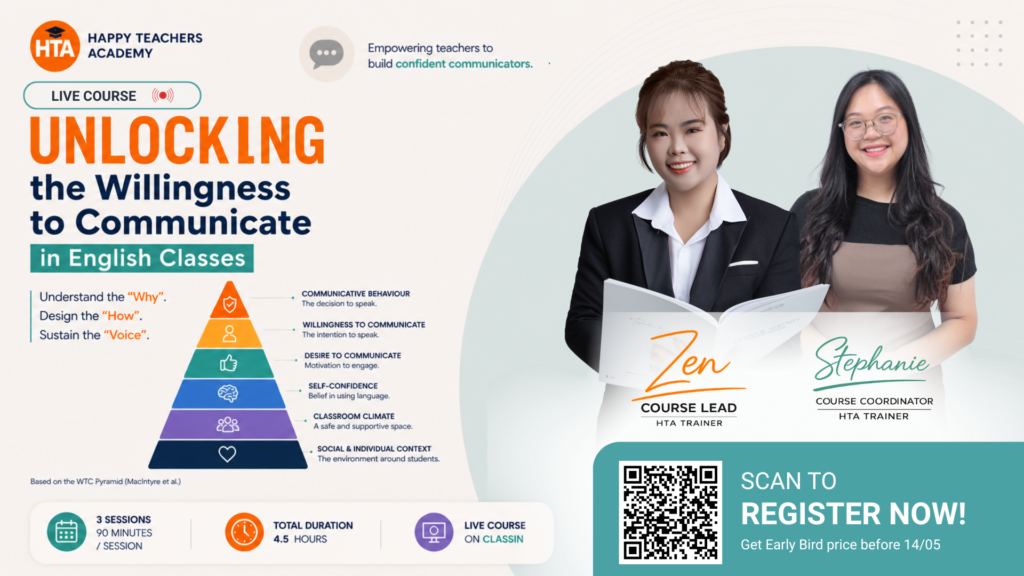

Unlocking the "Willingness to Communicate" (WTC)
Description
A 3-session course helping teachers diagnose classroom silence, design high-speaking tasks, and build long-term student confidence using the WTC framework.
Course Features
- Live sessions + self-study access
- Interactive quizzes and activities
- Assignments with structured grading
- Final assessment and certificate
- Ongoing coaching and support
Turn Your Silent Class into Confident Speakers
- • Understand why students stay silent
- • Apply the WTC framework
- • Turn passive tasks into speaking
- • Reduce student anxiety instantly
- • Design age-appropriate speaking tasks
- • Give effective, face-saving feedback

Unlocking the "Willingness to Communicate" (WTC)
Unlocking the "Willingness to Communicate" (WTC)
Course Features
- Live sessions + self-study access
- Interactive quizzes and activities
- Assignments with structured grading
- Final assessment and certificate
- Ongoing coaching and support
Description
Many teachers struggle with quiet classrooms where students hesitate to speak. This course helps you understand why—and more importantly, how to fix it.
Using the Willingness to Communicate (WTC) framework, you will learn how psychological factors like anxiety, confidence, and classroom dynamics influence student participation. Across three live sessions, you will explore practical strategies to turn passive learners into active speakers.
You will learn how to design speaking tasks that lower pressure, apply techniques to reduce anxiety instantly, and give feedback that builds confidence instead of shutting students down. The course combines live training with self-study materials, interactive activities, and structured assessments to support your learning.
By the end, you will be able to transform your classroom into an environment where students feel safe, motivated, and ready to communicate.
Available Sessions
-
1
Session 1 - Decoding the Silent Classroom 1 time slot available
-
2
Session 2 - Designing Tasks That Get Students Speaking 1 time slot available
-
3
Session 3 - Building Lasting Speaking Confidence 1 time slot available
Live Sessions
-
1
Session 1 - Decoding the Silent Classroom
-
2
Session 2 - Designing Tasks That Get Students Speaking
-
3
Session 3 - Building Lasting Speaking Confidence
Session 1 - Decoding the Silent Classroom


 You're currently previewing this session. Browse the timeslots, then register for the course to reserve one.
What You'll Learn
Most teachers assume silence means low ability, but that’s rarely the real issue. In this session, you will learn how to identify the true causes behind student reluctance to speak using the WTC framework. You’ll explore the psychological and situational factors that influence participation and learn how to diagnose different types of silence in your classroom.
By the end, you’ll be able to clearly understand why students are not speaking, and what needs to change before expecting output.
You will learn to:
- Identify types of classroom silence
- Apply the WTC Pyramid model
- Recognize anxiety vs processing
- Diagnose participation barriers
- Analyze real classroom scenarios
What You’ll Gain
In this session, you will walk away with practical tools you can immediately apply to better understand and respond to student silence in your classroom. Rather than relying on guesswork, you’ll have a clear approach to identifying what’s really holding your students back.
By the end, you’ll be equipped with a structured way to diagnose participation issues and make more informed decisions about how to adjust your teaching.
You will leave with:
- A simple method to diagnose silence
- A checklist of common WTC barriers
- A framework to analyze student behavior
- A quick lesson reflection tool
- Clear next steps to improve participation
What You’ll Do
Session 2 - Designing Tasks That Get Students Speaking
You're currently previewing this session. Browse the timeslots, then register for the course to reserve one.
What You’ll Learn
In this session, you will learn how to design speaking tasks that actively trigger student participation rather than rely on chance. You’ll explore how to reduce the psychological pressure of speaking and structure activities that make communication feel natural and achievable.
By the end, you’ll understand how to move from “asking students to speak” to actually designing tasks that make them want to speak.
You will learn to:
- Design high-WTC speaking tasks
- Apply psychological scaffolding techniques
- Lower the “cost” of participation
- Adapt tasks for different age groups
- Structure speaking activities effectively
What You’ll Do
In this session, you will apply practical techniques to redesign common classroom activities into more engaging and effective speaking tasks. Through guided practice, you’ll experiment with task design and explore how small changes can significantly increase participation.
By the end, you’ll have hands-on experience creating tasks that encourage more students to speak.
You will:
- Redesign low-engagement activities
- Apply scaffolding to speaking tasks
- Compare task types for different ages
- Participate in guided task design
- Test ideas through discussion
Session 3 - Building Lasting Speaking Confidence
You're currently previewing this session. Browse the timeslots, then register for the course to reserve one.
In this session, you will learn how to manage classroom interaction and feedback in a way that keeps students speaking over time. You’ll explore how different feedback approaches can either build confidence or shut communication down, and how to maintain a supportive speaking environment.
By the end, you’ll understand how to guide student interaction while preserving motivation and confidence.
You will learn to:
- Manage student interaction effectively
- Apply face-saving feedback techniques
- Use recasting and delayed correction
- Maintain a supportive speaking environment
- Encourage consistent student participation
What You’ll Do
In this session, you will practice applying feedback techniques and managing real classroom speaking situations. Through guided activities, you’ll explore how to respond to students without interrupting flow or reducing confidence.
By the end, you’ll have practical experience handling speaking activities in a more effective way.
You will:
- Practice feedback in speaking activities
- Apply recasting and delayed correction
- Roleplay real classroom situations
- Manage student interaction in tasks
- Reflect on your feedback approach
What You’ll Gain
In this session, you will gain the skills and confidence to manage speaking activities without reducing student motivation. You’ll develop a clearer understanding of how your feedback impacts student willingness to communicate.
By the end, you’ll feel more confident supporting students as they continue to speak and improve.
You will gain:
- Confidence in giving effective feedback
- Strategies to maintain student motivation
- Clarity on managing interaction
- Awareness of feedback impact
- A consistent approach to speaking support