Most teachers don’t stop self-study because the content is bad.They stop because the course never asks them to do anything with what they’re learning.
You watch a video. You understand it. You plan to try it later.
Later never quite comes.
We’ve seen this pattern again and again, and it’s shaped how we’re rolling out the next phase of HTA self-study.
What HTA self-study already include
Right now, HTA self-study courses are built for real teaching schedules.
Lessons are short and structured, with a clear flow from input to example to application. Videos are trainer-led and grounded in classroom reality. Resources are downloadable and practical, including PDFs and planning templates teachers can reuse immediately.
This foundation matters. But it’s only the starting point.
The shift: from watching to participating
Most self-study platforms rely heavily on video and text, with interaction added at the very end, if at all. Our focus is changing that experience by building participation directly into the learning itself. This means learners don’t just consume content. They respond, reflect, and make decisions as they go.
Embedded reflection and note-taking inside lessons
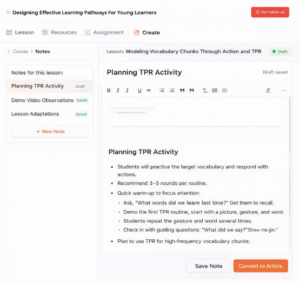
As part of the rollout, learners will be able to take structured notes directly inside self-study lessons. Reflection prompts will appear at meaningful points, not as an afterthought. Notes stay connected to the lesson content and can be revisited, refined, or shared later. This helps teachers hold onto ideas while they’re learning, rather than hoping they remember them later.
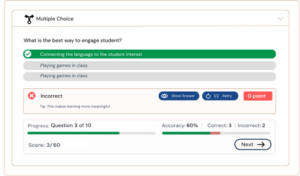
New activity types that mirror classroom thinking
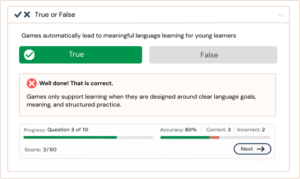
Self-study activities will go beyond basic checks for understanding. Learners will work through sequencing tasks, respond to classroom scenarios, and think through instructional choices based on real teaching situations. The goal is to practice decision-making, not just confirm recall
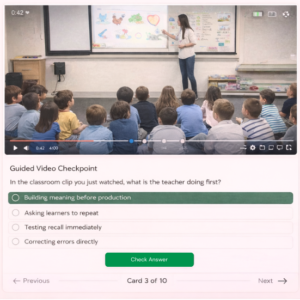
Interactive videos that pause for thinking
Some videos will become intentionally interactive. At key moments, the video will pause and invite learners to reflect or respond before continuing. This mirrors what happens in live workshops, where learning deepens through well-timed pauses and questions.
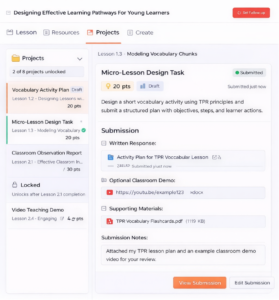
Assignment submissions within self-study
Self-study courses will also support structured assignment submissions. Teachers will be able to submit written reflections or planning tasks directly within the course, helping bridge the gap between learning and classroom application.
What this means for learners and course creators
For learners, self-study begins to feel more like a guided workshop you move through at your own pace. For course creators, it becomes possible to design self-study experiences that are active, reflective, and grounded in real teaching decisions, not just content delivery.
The goal of this rollout
This rollout is about making self-study more engaging, more practical, and more human.
Less passive watching.
More thinking, responding, and applying.
That’s the direction we’re intentionally building toward.